Description
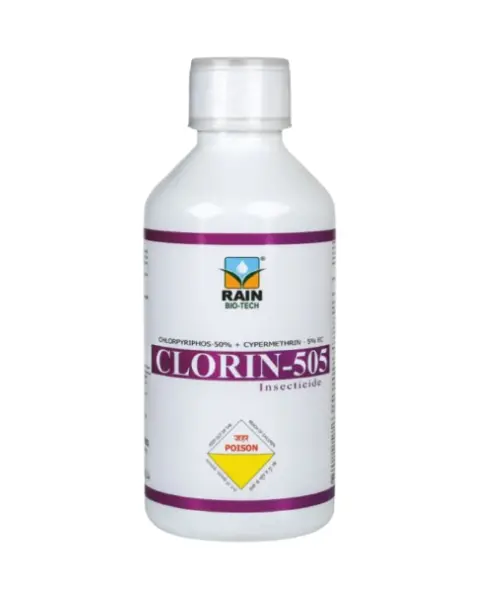
About Rain Bio-Tech CLORIN-505
- CLORIN-505 is a broad-spectrum insecticide that is a powerful combination of Chlorpyriphos and Cypermethrin.
- It controls pests through both contact and stomach action and keeps the crop protected for a long time.
- It is especially effective against sucking and chewing pests and is a reliable solution for farmers.
Rain Bio-Tech CLORIN-505 Technical Compositions
- Chlorpyriphos 50% w/w Cypermethrin 5% w/w Emulsifiable Concentrate (EC formulation)
Features
- Combination of organophosphate + pyrethroid for dual action.
- Provides rapid knockdown effect with long residual activity.
- Effective on a wide range of sucking, biting & chewing insects. Works well under different climatic conditions.
- Combination of organophosphate + pyrethroid for dual action.
- Provides rapid knockdown effect with long residual activity.
- Effective on a wide range of sucking, biting & chewing insects. Works well under different climatic conditions.
Mode of Action
- Chlorpyriphos: Acetylcholinesterase inhibitor; disrupts nervous system of insects.
- Cypermethrin: Pyrethroid; acts on insect nerve membranes causing paralysis and death.
Dosage
- Per Litre: 2 ml per litre of water Per Acre: 400–500 ml per acre (in 150–200 litres of water)
Additional Information
- Crop Suitability: Cotton Paddy Soybean Pulses Vegetables (tomato, brinjal, okra, chilli) Groundnut
Explore more from our collection.
Reviews
There are no reviews yet.